
About Us
Visually Speaking doesn’t just support learning — we help families, educators, and professionals see learners more fully.


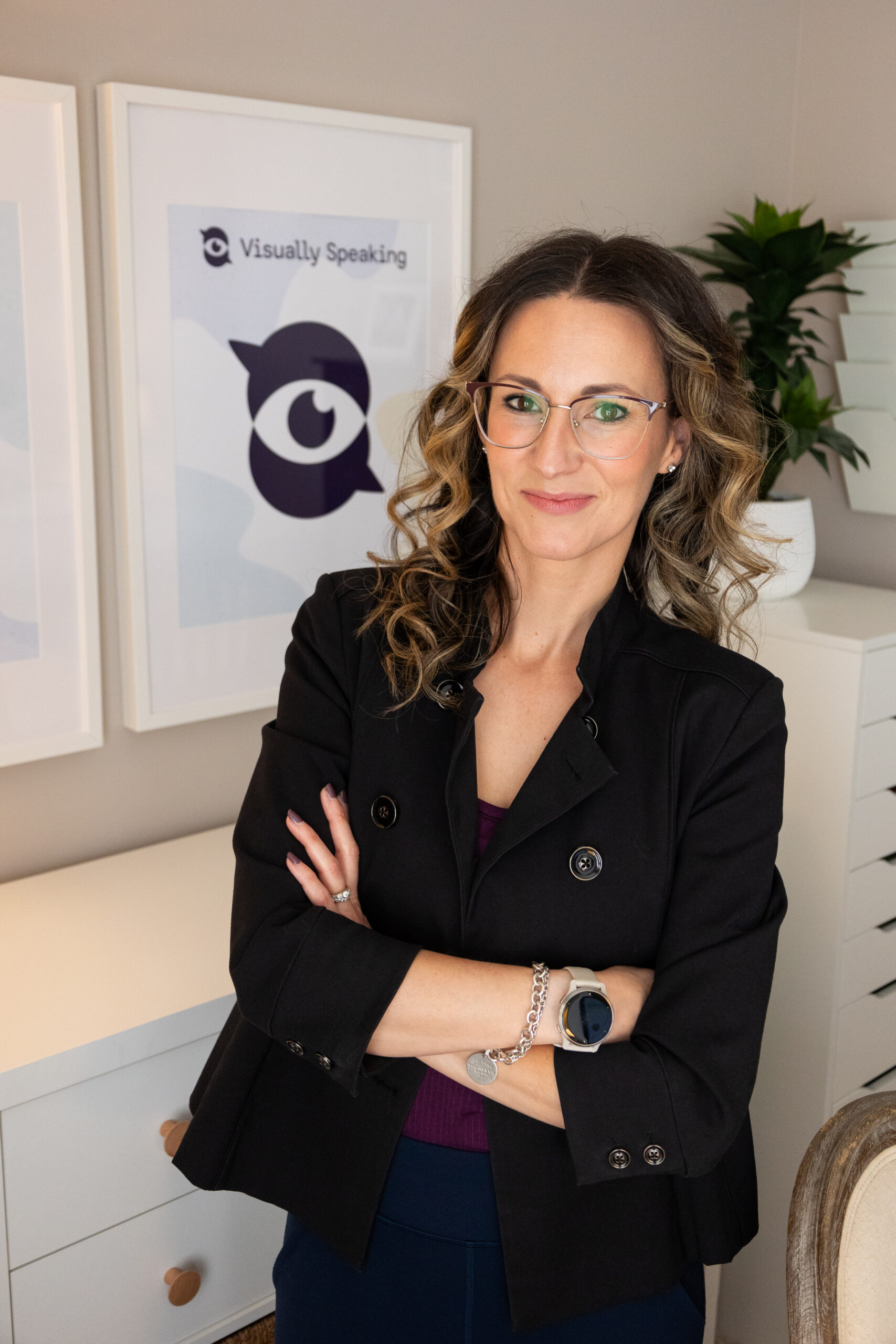
About Melissa
Rooted in lived experience, designed for real-world support
Melissa Choquette founded Visually Speaking after years of supporting learners whose strengths were often misunderstood or overlooked.
As a neurodivergent educator and parent of neurodivergent children, she understands firsthand the advocacy, navigation, and collaboration needed to create environments where differences are respected, communication is shared, and growth is supported.
With nearly two decades of experience in Ontario’s public education system, Melissa has worked across inclusive classrooms, special education, and professional learning spaces. Through this work, she saw a gap: families, educators, and other people supporting learners needed practical, accessible ways to understand how learners grow — and support themselves and one another along the way.
Visually Speaking was created to meet that need, bringing together lived experience, professional practice, and inclusive values to support the people who support learners. Through visual tools, resources, conversations, and community, Melissa helps learning coaches and learners make sense of development together — because learners thrive when the people supporting them are supported too.
What makes us different?

Our work is neurodiversity-affirming
Because learner differences are expected and respected, we offer choice and flexibility in how learners engage.

Our resources are designed to support communication
They use simple, learner-friendly language, focus on one idea at a time, and offer flexible ways to participate wherever people support learners.

Our approach accounts for the whole learner
Thriving happens when mind, body, environment, and relationships are supported together — not treated as separate pieces.

Our work respects that learners grow at their own pace
Because progress doesn’t always happen in a straight line, we design tools to meet learners where they are.
A way in for all
Different roles.
Shared Purpose.
The people who support learners may have different roles, but they are united by a desire to help learners thrive.
At Visually Speaking, we use the word coach to describe anyone who supports a learner

The Therapist Coach
Therapeutic support roles may include:
Speech-Language Pathologists, Occupational Therapists, Physical Therapists, Behaviour Therapists, Social Workers, and more.

The Clinician Coach
Healthcare and assessment roles may include:
Psychologists, Psychiatrists, Pediatricians, Nurse Practitioners, Dietitians, Care Coordinators, and more.

The Educator Coach
Teaching and learning roles may include:
Classroom Teachers, Special Education Teachers, Educational Assistants, Early Childhood Educators, Educational Consultants, Learning Support Teachers, and more.

The Parent Coach
Coaches who provide ongoing personal support may include:
Caregivers, Extended Family Members, Grandparents, Guardians, Parents, and more.
An entry point for every learner
Every learner grows in different ways.
Shared conversations help us notice, understand, and support that growth—together.
Simplified Summary
This page talks about how Visually Speaking started and shares some of Melissa Choquette’s journey to create it. It also explains four important parts of Visually Speaking: * learners are different and that is okay * how we send and receive messages matters * learners grow in many ways * learners grow in their own time. Visually Speaking uses the word coach to group the many people who help learners grow and learn. Coaches can be people who teach, support, care for, or work with learners. There are nine big ideas that help coaches talk about learning together.